Showing posts with label Indie. Show all posts

Friday, April 16, 2010

Record Store Day is Tomorrow!

 Gearing Up for Record Store Day in Berkeley

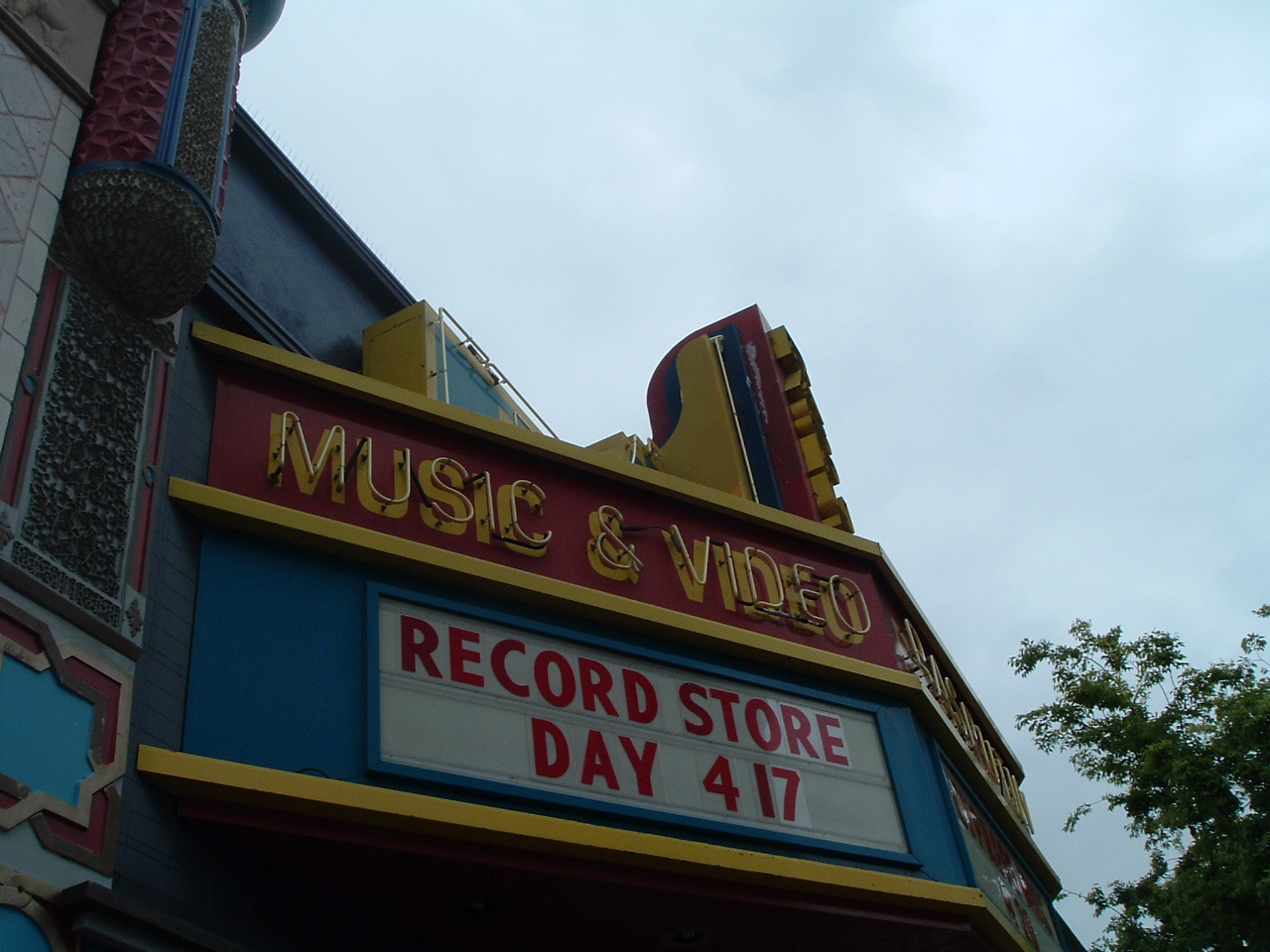
I'm so thrilled that Record Store Day has become a regular event and that it seems to be getting bigger every year. If you haven't already, clear your calendars for the third annual event being held tomorrow, Saturday, April 17th, so that you can spend some time combing through the shelves and bins of your favorite independent record store. Buy some records, CDs, and tapes and embrace the benefits of music that can be held in your hands. You may also get the chance to see live music, have your CDs/vinyl signed by artists, mingle with bands, get some freebies, and bond with fellow music fans.

The Record Store Day website has links to various events happening tomorrow, including the skinny on super-exclusive releases that will no doubt sell out quickly during the festivities.

Last year I went to Aquarius Records in San Francisco and let my then 3-year-old sift through the bargain bins for CDs. She ended up selecting a number of interesting albums, including 2 CDs that were later added (unrelated to her efforts) to current rotation of the radio station where I DJ (months after she chose them). I can't wait to see what she finds this year!

Although some radio stations are doing some Record Store Day-themed programs and events, I haven't heard about anything big being planned by college radio. If you have the low-down on any college radio stations with big plans for Record Store Day, please post your comments below.

For those in the San Francisco Bay Area, a whole bunch of record stores are participating and in particular there's a ton of stuff happening at Amoeba Records in Berkeley and in San Francisco, with signings, live music, and various giveaways.

Tuesday, March 2, 2010

Noise Pop Crowd Gets Schooled in Music Biz at Industry Noise 2010


On Saturday, February 27th I headed over to the Swedish American Hall in San Francisco for the 2nd annual "Industry Noise" conference. As I mentioned in my summary of last year's conference, this event is a descendant of the Noise Pop educational sessions that have been taking place pretty much every year since 2000. This year it cost participants between $65 and $115 to sit in on panel discussions, hear keynote presentations, and get advice from mentors in the music biz during the day-long conference.

Perhaps making it easier for working folks, Industry Noise was back to being a weekend event (last year it was on Friday). According to the schedule handed out at the event, "The focus is independent music, technology, and the path we're on as musicians, music lovers, industry schmucks, and tech geeks."

The festivities began at 9:30 in the morning and ended with cocktails at 4:30. I was there for the morning sessions and here are some highlights:

Morning Speaker: Josh Freese


Josh Freese Chats with Ashli Lewis


The morning began with a pretty interesting on-stage conversation with musician Josh Freese. Ashli Lewis interviewed him, asking him to share tidbits from his music career. From their discussion we heard about how his professional music career began at age 12 with a stint playing on the Tomorrowland Stage at Disneyland. He worked with Dweezil Zappa while in his teens and soon after joined the Vandals. These days he's a member of Devo, A Perfect Circle, as well as the Vandals.

Having performed on more than 300 albums (he's worked with Nine Inch Nails, Cher, Megadeath, Joe Cocker, Social Distortion, and many others), Ashli Lewis compared Josh to the legendary session drummer Hal Blaine.

However, the main reason that Josh was at Industry Noise was to talk about his innovative method for marketing his own solo album "Since 1972." When he heard that his release from 2000 was still selling (albeit to maybe one person a week), he started to think about how it would be great to meet the people buying his album to thank them personally.

From that kernel of an idea, he brainstormed a bunch of outrageous packages that he could offer to fans in order to both market his new album and get some publicity. Prices ranged from $7 to $75,000 for simply a digital download of the album ($7) to experiences with Josh. He offered up opportunities like drum lessons, lunch with him at the Sizzler, miniature golfing with him and some other punk/new wave legends, a private tour of Disneyland, ownership of his Volvo, to a chance to have an entire EP written about you and have Josh join your band for a month.

Never Trust Anyone Over 30

Twentysomethings Panel

The next session that I attended was a panel discussion about how young people are helping to change marketing and technology in the music industry. Surprisingly, during this panel I heard some mention that radio was still a relevant marketing tool. When asked about their suggestions for marketing a band like MGMT, Justin Little from Zeitgeist said, "their success has been based on radio." His suggestions for them included that they should "go obscure virally," but that they should also allow some of their album tracks to "develop more organically...even at radio...before it goes top 40."

The panelists contrasted their affinity for technology with the old guard's discomfort and lack of understanding. Eric Frederic of the band wallpaper said, "old industry doesn't understand the way things work on the web." He added that it's best to capitalize on web buzz by getting a release out soon after. Ty White from Topsin Media added that even coming up with a band name and an album name should be optimized for the web and search engines, pointing out that the GIRLS' record "Album" probably suffered lower sales just because the artist name and record name are so generic.

Ty also pointed out that as young people in the industry, "We start with fewer rules," adding that "it's possible for someone our age to never have purchased music" and that just being aware of that helps him to be a better marketer.

All of the panelists acknowledged that new technology tools come and go and they are able to adapt to these changes. At the same time they admitted that there is still no perfect social media solution for bands, with Ty complaining that although Facebook "feels like MySpace 2.0...it's a necessary evil." Eric added that Facebook is great for "engaging with fans," but that it's not a great resource for compiling tour dates, music clips, etc.

Keynote: Claudia Gonson from Magnetic Fields

Claudia Gonson Chats with Yoshi Kato

The final session that I attended was a keynote conversation with Claudia Gonson from Magnetic Fields. Music writer Yoshi Kato talked to Claudia about her dual role as band member and manager for Magnetic Fields. She's been playing music with Stephin Merritt since she was a teenager and has been managing him for almost as long.

Claudia admitted that she sees herself more as "management" than an "artist," and describes her job as akin to "running a restaurant," with the constant stream of demands, conflicts, and logistics. At times, though, Claudia has had to stress about both of her roles as artist and manager; which she said can be difficult to juggle. She said that the band actually fired her as tour manager once and her story about taking phone calls while on stage during sound check was a reminder to her that sometimes she had to focus on one job at a time. She explained, "I do turn my phone off now when I'm in the band onstage."

At the same time, though, Claudia pointed out that many musicians find themselves having to manage their own careers; so that balancing act is quite common. (The panel prior to this also mentioned that technology and websites like Facebook and MySpace have made it much easier for bands to market themselves and manage their careers.)

I was endeared to Claudia when she gave a shout-out to college radio. When describing the early success of Magnetic Fields she talked about the Boston scene, saying, "College radio is great guys...it's just great. That college kids listen to this much radio...and now it's online."

The remainder of the day included mentoring sessions with music industry folks (from labels, management, publishing companies, etc.), a panel about running one's own label, a workshop for aspiring producers, a panel full of artists (moderated by DJ/Live 105 Music Director Aaron Axelsen), a discussion about social media, and a panel about the future of the industry.


Previous Noise Pop 2010 coverage:

Noise Pop 2010 Has a Glamorous Start with Yoko Ono at the Fox Theater

New Wine Documentary "Blood into Wine" Chronicles Arizona Winery with Rocker Roots


Tuesday, February 2, 2010

Debating the Supposed Death of Indie

Sign posted near CMJ Music Marathon in 2008

I just read the much buzzed about Paste magazine cover story by Rachael Maddux called "Is Indie Dead?" As I plodded my way through her lengthy story I was overcome by a strong feeling of deja vu, as we've definitely been done this path before. She provides an overview of various definitions of "indie" as applied to music and by the end of the essay pronounces that the concept of indie is dead and that perhaps we are now in a post-indie world.

Back in 1998 I wrote a paper about the debates over the term "indie" as it applied to a college radio station concerned with making airspace available for under-exposed artists. That paper morphed into my 2007 article for Radio Journal, "Does Indie Mean Independence?," which subsequently spawned this blog Spinning Indie. So, for awhile now I've been interested in all of the conversations surrounding the contested definitions of indie as applied to music and radio.

Yes, of course, "indie" can be understood as a genre. But, it can also be understood as a specific, non-corporate method of production and that still does matter to some people.

At the same time, in all of my recent radio station travels it's become clear to me that many college radio stations are not as concerned about the indie/major label distinctions as folks were back in the 1990s. Unfortunately many stations take the path of least resistance, mirroring the playlists of every other college station out there. More often than not, the artists appearing on the majority of these playlists have some sort of major label distribution or backing and that's how they are ending up in the hands of stations all over the country.

So, I guess my personal plea goes something like this: regardless of whether or not something has been deemed indie, independent, alternative, hip, post-indie, mainstream, or passe by someone with some sort of authority; try to cultivate your own ear for music and listen with an open-mind to new (and old) sounds.

I applaud radio stations (like the one that I profiled for Radio Journal) who work hard to create an airsound that's different from the mainstream and who really care about making room for artists with limited resources.

Wouldn't it be amazing if a scan of the playlists of college radio stations all over the country revealed radical differences from city to city? There is SO much music out there that I think we all owe it to ourselves to dig for things that are unique, unsettling, strange, or surprising. It doesn't have to be the newest and hippest; often some of the most incredible gems are lost sounds from different eras.

Do you think that "indie" is dead? And if so, is this a crisis?

P.S. For more reactions to the Paste piece on indie, take a look at Flavorwire's selection of short essays from various music critics responding to the article.

Thursday, December 3, 2009

WRXP's "The Vinyl Experience" Show

"Vinyl Experience" Host Paul Cavalconte Browsing Record Bins at Rough Trade in London
Photo courtesy Paul Cavalconte

When I visited commercial radio station WRXP in New York City back in October, one of the things that impressed me was word that they were starting up a vinyl-only show on Sundays. The show premiered in late October and has aired 6 episodes so far on Sunday mornings.

Thanks to much to the host of "The Vinyl Experience," Paul Cavalconte, for taking the time to chat with me over email about this unique radio show. Although I was disappointed to learn that he wasn't actually hauling his vinyl to the radio station for the weekly show; it made sense when I found out that this is more a matter of fulfilling the specific goals that he has set out for the program. Since it's only an hour a week, he's crafted it more like a magazine; with features designed to help instill a love of vinyl. One might call Paul the "vinyl evangelist," as he's working to both educate people about vinyl and encourage vinyl listening.

To learn more about the show (airing from 9 to 10am Sundays in New York City and on the WRXP webstream) and take a look at playlists, see Paul's blog on the 'RXP website.

As I talked with Paul he shared with me his college radio past, his love for vinyl, the intricacies of putting together his show, and his hope that through the show he'll be able to encourage more people to pick up and listen to vinyl records.

On to the interview:

Spinning Indie: How did the Vinyl Experience Radio Show come to exist on RXP.

Paul Cavalconte: It began as my web page. Leslie Fram, who is also our Program Director, challenged me to come up with the on-air equivalent. Originally I thought it would be a feature, one vinyl-only song, but she said "you need to do a whole show on this." When I set about putting the demo together, I realized that this show needed to be carefully planned and produced so as to convey what I have learned and wish to share. So winging it as a live free-form hour of spinning turntables doesn't cut it--as much fun as that can be, meeting the goals I have set for myself is more fun!

Spinning Indie: Tell me about the first show. What did you play and how did people react?

Paul: I have had wonderful response so far, and you can check out playlists on my Vinyl Experience web page at 1019rxp.com, and also "The Vinyl Experience Radio Show" on Facebook. The first song on the first show was Pearl Jam "Spin The Black Circle."

I like to begin each show with a song about records or "the vinyl experience," such as Squeeze's "If I Didn't Love You," Ryan Adams' "Majick," The Kinks' "Juke Box Music," Todd Snider's "Vinyl Records." I have debuted new single-only tracks by Arctic Monkeys, David Gray, local artists like Locksley and Black Gold. I've done focus pieces on classic stuff such as the alternate mixes on the mono late Beatles albums; the back story and ongoing influence of David Bowie's "Space Oddity," tied in with the reissue of the original British album. Sometimes I'll throw historic stuff in, such as audio on commemorative records released for the Apollo 11 Moon landing, JFK's assassination, etc.

Vinyl Records Propped in the Window of the 'RXP Music Director's Office

Spinning Indie: Are you mainly playing music from your own collection? Does RXP have a vinyl library?

Paul: We are building a library of new releases and some catalog stuff, and I certainly draw on my own collection for much of each weekly show. Eventually, I would like to see RXP put vinyl into active on-air duty, or to use the vinyl aspect in imaging the presentation of library classics, but we'll need a setup for that, because.....

Spinning Indie: How many turntables does RXP have?

Paul: None! I am not playing records live on-air and I don't intend to! There are a few practical reasons. First off, all broadcasting is now entirely digitally transmitted, from the console to studio-transmitter link, to on-air audio processing and finally the transmission itself..... so the analog texture one experiences listening to records on a home Hi Fi system cannot be exactly recreated --that's why I like to say "DO try this at home.

That said, I do feel that some psychoacoustic aspects of the analog listening experience do translate--better midrange definition, better bass pitch, more palpable imaging. Vinyl dubbed to digital sounds like vinyl, but with the glassiness of digital superimposed over it; master tape commercially cut to CD sounds like something very different.

Interestingly, digital recordings mastered to vinyl sound digital--as vinyl is a very faithful and transparent medium, despite the signal-to-noise improvements in digital. I also do believe that the "substrate awareness" factor of a palpable medium--stylus drag through the groove and the occasional pop and tick--adds to the analog psychoacoustic effect, and this does translate to digital as well.

I dub all analog sources from my own audiophile home system, and edit and assemble the show using Adobe Audition on my computer, set for the highest possible resolution manageable. It is very sensitive and responsive. If the tubes in my preamp and my vintage Neumann microphone are not sufficiently warmed up, I can hear it on the recording! I can certainly hear the differences in cartridges I use, and I believe that astute listeners can pick up on this, but it is not specifically what I'm aiming for!

Most importantly, I want the show to evoke the vinyl listening experience and encourage people to seek it out in their own lives. I want to detail the culture of records and how albums are a body of pop literature. I want young listeners to build the kind of relationship that I enjoy with records and through that, a better understanding of music. So it goes way beyond audio geek-dom, which is a very minor consideration, even though I have a lot to say about it!

Paul's Gear
Photo Courtesy Paul Cavalconte


Spinning Indie: Why do you think that vinyl has a future?

Paul: We will always need "hard media", and vinyl--along with CDs--are that. Both older and new generations are enamored of vinyl--for one, nostalgia, for the other, discovery. I do believe that the sonic advantages of analog will win fans over, but that must be properly presented. The quality of vinyl playback equipment has improved greatly over the affordable commercial stuff out in the market back when vinyl was the only game in town!

Spinning Indie: What do you love about vinyl?

Paul: Vinyl is sensual. It has a feel, look, even smell (the sweetly musty book-smell that libraries have) and most certainly a sound. That sound is truer to life for me, despite the many disadvantages of vinyl playback...but anyone can learn to hear through those small distortions and deeper in to the music than squeaky-clean but one-dimensional digital will ever allow.

More of Paul's Gear Used to Craft the "Vinyl Experience" Show
Photo courtesy Paul Cavalconte

Spinning Indie: Are you aware of any other commercial stations with vinyl-only shows?

Paul: Quite a few stations (mostly AAA and Oldies) do vinyl segments featuring one or two special songs, or a "Turntable Thursday" type all-day feature...some track entire albums for effect. "The Vinyl Experience" is (as far as I know) the only longform American broadcast radio show about the culture, story and sound of vinyl records. It surely is the only one addressing technical aspects, offering Vinyl News and "Turntable Tips." It is an on-air magazine, more so that a feature, and that's my concept!

Spinning Indie: Do you have a college radio past? If so, at what station?

Paul: I sure do! I went to Fordham in The Bronx, New York and I owe my career to WFUV. When I was there (1979-83) students had much more air time and power. It is public radio now, with some student involvement, but mostly a paid professional staff.

Spinning Indie: Anything else?

Paul: I am always looking for new music and --sticking with the concept of the show--if it is on vinyl, I will consider playing it. The show right now is rooted in library and major label releases, but I would love to break a little Indie music too.

I'm also soliciting listener participation through our "Virgin Vinyl" feature, where you tell us about your "first time" --with a record, that is! I'll also ask visiting artists what LP was their first, or changed their lives. I'm planning personal appearances through Record Store Day, and naturally, sponsorship of the show by vinyl-related purveyors who might not have considered radio as an advertising option before.

Thursday, September 24, 2009

WOXY's MD Chats about His College Radio Past

The way that people listen to (and understand) radio keeps evolving and for many terrestrial radio is a relic of the past. This really hit home when I visited Flirt FM in Ireland and the Station Manager told me that she thinks that some day soon FM radio will simply disappear. Wow.

So, WOXY.com is actually a good example of that. Although it used to be an over-the-air FM station in Ohio; it is now a tremendously popular online-only station focused on indie music. Despite the fact that its home base doesn't really seem to matter these days, the station moved to the music mecca of Austin, Texas a few weeks back.

In his article on Austin360.com, Joe Gross chats with WOXY's Music Director Matt Shiv about both the station and Matt's history in radio. I was interested to see that Matt started doing college radio at the Earlham station while he was still in high school. Additionally, we may have crossed paths while we were both doing the radio thing at Bowling Green State University in late 1990s, as he was the MD at WFAL-AM, the sister station to WBGU-FM (where I was a DJ and Assistant MD). Small world.

WBGU Studio in 1997
(Perhaps Matt Shiva was across the hall at WFAL?)

The other thing that caught my eye was that WOXY is pretty much all digital, playing mostly WAV files that have been crafted from their CD and vinyl collection. According to the article:

"This is old-school, nearly free-form radio. The station, an Ohio modern rock icon that went online-only in 2004, now shares space in a building with ME-TV on South Congress Avenue.


Hanging out, I can't help but be reminded of my alma mater's station, WTJU, community radio for Charlottesville, Va. The vibe is the same, the scads of indie rock are the same.


But the technology sure has changed...


Four professionals are on staff, with a few other DJs pre-recording shows and sending them to the station, as opposed to dozens of volunteers...


Even online, a radio station with an audience this big seems a throwback to an earlier era, to the border stations whose massive signals reached from Monterrey in Mexico to Minnesota. It's college radio where anyone with an Internet connection is on campus."


According to the piece, the station was streamed for a total of nearly half a million hours last month. Pretty hard to fathom...

Tuesday, August 11, 2009

Off the Bus and on the Record: Teen Journalists of "Rock Star Stories" chat about their new Book


I have an equal amount of passion for teen culture and indie music culture; so when the two worlds collide it's a safe bet that I will be seek out whatever book, movie, website, 'zine, or piece of music is the resulting product.

As a former teen journalist, I was super psyched to check out the new book Off the Bus and On the Record: 22 Candid Interviews by the Teen Journalists of the Rock Star Stories. I love it when teens create their own media and it must have been a dream come true for these teens to make a mission out of interviewing some of their musical idols.

The book collects interviews conducted by the young journalists of the TV show The Rock Star Stories. The program began when siblings Amanda and Jaime Rich were asked to host a teen-oriented music TV show in Florida called Swept Away TV. They invited their other siblings Zac and Brittany to help out behind the scenes and the show grew from there, ultimately airing around the country, online, and on college campuses. Eventually they started a non-profit that works to help train other young people in media creation.

Their book collects some of their favorite band interviews (including The Donnas, All-American Rejects, Fat Mike from NOFX, and Fall Out Boy), many of which were conducted when some of the journalists were young teens. I was curious how this group of young music fans discovered new music and if radio (especially college radio) played any part in their lives.

To learn more about their take on music discovery, music journalism, and what it's like to be young and interviewing rock stars; I had an email chat with Brittany and Zac Rich. I also got some perspective from the author of the book's foreward: Aaron Burgess. Aaron used to be the editor of indie music staple Alternative Press and he sheds some light on rock journalism across the generations.

The Rich Siblings

Spinning Indie: How do you learn about new music?

Brittany Rich: I listen to some of the obscure channels on satellite radio and listen to all kinds of music on Myspace. I also get recommendations from my friends who have all kinds of musical interests.

Zac Rich: A lot of ways. I tune into Pandora and Sirius radio. But also from other bands during interviews [who] will tell you "oh you have to check out this new band, they're really good."

Aaron Burgess: Even though working in this industry for a while has allowed me to get on a lot of mailing lists to hear advance music, I still discover most of the really good stuff the same way I always have: through word of mouth. Granted, the concept of “word of mouth” has changed a little since I first started getting serious about music. These days, I find out about new music primarily online, but I still go after the music that really grabs me in pretty much the same way I did before the Internet. (Yep, I’m officially old enough to be considered “pre-Internet.”)

Thanks to the Web, it’s just gotten a lot easier to learn more, faster, about new bands, and to go deeper than that to learn about things like the bands that inspired them and the genres, concepts and other big ideas that tie everything together. All that said, I still like having to work to learn more about bands that interest me, and I love to be surprised when a band I never could’ve imagined existing comes completely out of left field and sets me off on another tangent.

Aaron Burgess

Spinning Indie: Do you listen to radio? college radio?

Brittany: I listen to Sirius radio in the car and some local rock radio but we don't have a lot of alternative or even rock on the radio in our area. When I move into the dorms this year at college I will probably start listening to college radio.

Zac: Sirius Radio and Internet Radio.

Aaron: I don’t actively listen to commercial radio at all, and I listen to college radio primarily online while I’m at work. I love being able to sit at my desk in Texas and listen to a station in Ithaca or Pittsburgh or Washington—although I have to admit, I don’t listen to college radio as much for discovery as I do to affirm whatever tastes I might be pursuing at the moment.

When it comes to discovering new music, I visit a lot of music blogs and MP3 blogs, and I really like reading customer reviews at sites like Amazon and staff write-ups at stores like Aquarius and Amoeba. I’ve been relying on Twitter for new-music recommendations a lot lately, too. I’m aware of the irony here, but even though I review music professionally, I hardly ever look to professionally written reviews to give me the best insight into whether I’ll like a new record.

Spinning Indie: How do you think being an on-air (TV, video) journalist different from being a print journalist? Have you guys done both?

Brittany: I have done both but on air is much harder because you have to react in the moment to what the interviewee is saying. You also have to keep focused in spite of what may be going on around you. Your body language also is important on air. You want to give the same impression with your words and your actions.

Zac: Being on air makes you have to think really quick on your feet. You have X amount of time on camera and every move you make [and] question you ask gets shown on the tape. So you have to be really focused and able to think quick on your feet. No matter how much you get ready for an interview it won't have any effect if you lock up on camera and forget everything.

Aaron: I have a lot of respect for the Swept Away crew for having the guts to hone their chops on-air. I wouldn’t go so far as to say that anyone can do print journalism – interviews full of social awkwardness and dead air can be just as painful to experience when they’re not being broadcast live. But I do think that you have a tougher job as a TV or video journalist because you have to be totally present while your subject is in the spotlight.

You have to be ready for anything in ways that a print journalist doesn’t, and you have to be hyper-aware of things like timing, appearance, composure and rapport in ways that you don’t have to when you’re interviewing someone for print. With print, you can edit a terrible interview to look like something that flows. On video or TV (or even radio), the camera won’t let you lie quite as easily.

Spinning Indie: I see that your ventures now include radio. Is that relatively new and how do you like doing a radio show compared with TV?

Zac: I been doing Internet radio for the last 5 years, it's a uncensored talk show aimed at college students. It's nice to be on the Internet because of the freedom of being uncensored and being able to say whatever we want.

Spinning Indie: Do you think teens and young adults are better interviewers/journalists than
older folks? Why?

Zac: Yes! for starters we care more about who and what we're interviewing because most of the time the band plays a role in our lives. Either we hear their music every day or we [or] our friends talk about them every day. Also because a teen or young adult journalist isn't as threatening to a band as a someone from NBC or ABC or MTV. To them we are just fans, but with a great job! This makes most bands open up more and tells us some really great stories.

Aaron: I really think it depends on the interviewer more than the age of the interviewer. In order to be a great interviewer, you really need to understand people—what makes them tick, how to unlock them—and for a lot of us, this sort of empathy a skill that only comes with time, experience and a lot of personal ups and downs.

That said, I’ve met a lot of teens who are wiser beyond their years than I ever was at that age, and I’ve met a lot of adults who continue to act like the stereotype of a dumb teenager. As one of those “old folks” myself, I can attest to the fact that age has brought wisdom and a wider sense of empathy for the people on the other side of the microphone that I might not have had when I was a 16-year-old doing my first interview. Knowing what I do now, I can only imagine how much better some of those early interviews would’ve been.

Spinning Indie: What do you love about music journalism?

Brittany: I love the excitement of discovering a new artist and telling everyone about him or her. I really like when other people discover an artist that I really enjoy listening to. I like to share!!!

Zac: Being able to say, "hey you know that band we interviewed like a year ago when no one else would give them the time of day?", and now they're the hottest thing on MTV and on the radio. That's the greatest part :-)

Aaron: I love getting beyond the music to understand more about the people who make it: their ups, downs, strengths and flaws. I love learning what makes people tick and being able to get insight into how great musicians become great. I love learning that my favorite artists are people, too, and I love it when I can get someone to open up about not just how they got from point A to point B in their craft, but how there were all these other factors that allowed them just to find where point A was in the first place. Beyond all this, though, I love being able to come back from an interview or assignment and have the chance to share what I find with other people.

Spinning Indie: What has it been like being a young female journalist interviewing mainly male musicians. Have you found the indie music scene to be welcoming?

Brittany: It can get weird and the guys can get really sexist but for the most part everyone has always been totally cool and nice. We keep it professional and music related or least we try to. Most indie artists are so appreciative of us trying to promote their music and it shows in their interviews. I started doing this when I was in 6th grade and back then I felt very self conscious and shy. After so many years nothing phases me anymore-even weird Jeffree Star!


Thanks to the crew from The Rock Star Stories for sharing their passion for music with me!

Tuesday, July 28, 2009

Interview with College Radio Vet and "Kill the Music" Author Michael Plumides


I'm always on the lookout for college radio references in pop culture and some of the most interesting happen to be real life tales recounted in books.

A new book, Kill the Music: The Chronicle of a College Radio Idealist's Rock and Roll Rebellion in an Era of Intrusive Morality and Censorship, by Michael Plumides includes college radio as a backdrop. This time the location is South Carolina, the era is the late 1980s and early 1990s, and the affiliated radio station is WUSC-FM. Plumides was a DJ at WUSC and also ran the 4808 club, the site of an infamous incident at a GWAR show involving accusations of obscenity on the one hand and censorship on the other.

I interviewed Michael to learn a bit more about his book and how college radio figured in to the whole Charlotte/Columbia, South Carolina scene back in the day. In our email discussion he talks about his introduction to college radio in the 1980s, his DJ gig at the now defunct WLOZ (University of North Carolina, Wilmington) when it was a cable FM station (and after the station's infamous drug scandals), DJing at WUSC, the current state of college radio, censorship and music, and his "indie" approach to his new book Kill the Music.

On to the interview:


Spinning Indie: What drew you to college radio?

Michael Plumides: College radio. You know, I was always a big alternative music fan: The B-52’s, REM, The Ramones, The Cars, Flying Lizards, Thompson Twins, English Beat, and Talking Heads. Problem was that my hometown of Charlotte, NC, did not and still doesn’t have a true college radio station.

In the early eighties, while in high school, I used to listen to a station at Davidson, the call letters were WDAV-FM; and they had a “college radio hour”, but aired only on Saturday around midnight. WFAE-FM was originally assigned, and licensed to UNC-Charlotte and played easy listening, classical, and big band. WFAE had shows like “Night Moods” playing cool jazz tunes by Earl Klugh, David Sanborn, and Sade, but it was never run by students, and was too adult for my sensibilities.

Anyway, I went down to Atlanta in June of 1983 to see a B-52’s show, but we stopped off in Athens to pick up a friend. That was the first time I heard college radio. WUOG-FM. I was hooked. It was new and it wasn’t Duran Duran. So, when I started college at University of South Carolina in the fall of that year, I tuned in daily to WUSC-FM, when they had just upped their range to 3000 kilowatts. Before then, I had to resort to the back pages of Rolling Stone Magazine to find my music; it seemed to be the tabloid of record for the period.

Eventually, WFAE was moved to Uptown Charlotte, and now is primarily an NPR station. Some students were up in arms. Their position was that WFAE had been high-jacked by the city, and believed that the station had actually belonged to UNCC, where I went to summer school one semester. In an effort to compromise with students interested in establishing a “student run” radio station in the early nineties, the SGA entertained the idea of starting a new station, but insisted on a student poll to determine the future radio station’s format. The verdict? Top 40. Students lost interest.


Spinning Indie: Tell me a bit about the first station where you DJ'd and when you were there?

Michael: The WLOZ-FM station, originally broadcast from UNCW on 91.3 (now public radio WHQR's frequency) before being shut down by administrators in 1983 because of a drug scandal. Supposedly, the student broadcasters called out to their dope smoking customers on-air, using code language to indicate that certain packages had arrived. The death knell came when a deejay took a bong hit while broadcasting.

In the mid-eighties, WLOZ returned as "cable radio station," requiring a special hookup to your cable TV. You had to go to Radio Shack and buy this coaxial antennae device to rig to your receiver. Needless to say, we had a deeply disturbed following. I was in on the “Cable FM” incarnation (90.9) in 1985 and 1986, where I acquired my first FCC license, and then I transferred back to USC. For a time in the late '90s, WLOZ broadcast an extremely weak signal on 89.1 FM that could more or less only be heard on campus. That station ceased functioning in 2001. I understand they’re now a net broadcast.

Spinning Indie: When did you join WUSC and what years were you there?

Michael: I joined WUSC in September of 1986, and I was there through May of 1988, and was Promotions Director for my last year there. They paid me $18 every two weeks. That’s an extra few beer cases every month. Bonus.

Spinning Indie: How did WUSC compare with WLOZ?

Michael: WUSC-FM was very organized, and had recently been celebrated as one of the “Tastemakers” in Rolling Stone Magazine circa October 1986 in the “College Issue.” WLOZ was a good springboard experience for me and taught me my way around a control room. Speaking of which, the one advantage of WLOZ’s control room was it was brand spanking new, and WUSC’s control room was a little more “lived in.” It’s still the same, with some minor changes.

But WUSC was established and very connected. We had deejays moonlighting for Capitol Records, and some got tons of payola, which later became a no-no in college radio. I was fortunate in that when I transferred back to USC, I had radio experience and I was personable. That worked for and against me. But I bypassed all the bull shit that a lot of other trainees had to go through. I guess it was easy for me, and it wasn’t supposed to be.


Spinning Indie: What role did WUSC play in the music community of Charlotte when you were there as both a DJ and a club owner?

Michael: As I mention in the book, “Columbia and Charlotte were only 90 miles apart but they might as well have been a million miles away from each other.” But I would occasionally drive to Charlotte to interview bands at the old Coliseum. Some of the bands performing there, usually the opening acts, were getting airplay in Columbia that no one would touch in “The Queen City” on our station.

WUSC was a fixture in Columbia, SC, by the time I started working there. The station had “partnerships” with certain clubs and bars in town, albeit unofficially. Saved the venues a lot of add dollars. But I think that WUSC was an intricate part of the University. I think it’s a necessary function at any major learning institution to have a college radio station. I think a college radio station adds legitimacy, just as much as a good football or basketball team. Well, at least as much legitimacy as a decent soccer team.

Spinning Indie: In your book you write a bit about conflicts and politics at WUSC and how you were accused of breaking FCC rules even though you had an aircheck that proved otherwise. What did most DJs think of station rules/enforcement at the time?

Michael: Interestingly, my own college radio station, WUSC, has not embraced my book, refusing to interview me on two separate occasions. I guess they’ve taken offense to some of my insights. What I don’t understand is, I was very kind to WUSC-FM in KILL THE MUSIC, and the only scathing commentary in the book refers to the “Fat chicks in black” who abused their positions of authority twenty years ago. There again, Bruce Dickenson of Iron Maiden, took offense personally to the film “Spinal Tap.” Go figger.

The way I see it, some rules are meant to be bent, and others broken. And I was always a “push the envelope” kind of guy. I think I provoked some of the more timid guys to grow some balls and stand up for themselves, because everyone was sick of the Gestapo tactics. In that sense, I may have represented a threat to their system. Maybe I still do. I don’t know. I’m a little far removed from their Cheney-esque, behind-closed-doors decisions. I refer to their politics in the book, where the conniving reminded me of “witches peering over a cauldron of defiance and absurdity” and their plotting and plundering was reminiscent of “Macbeth.”

Spinning Indie: Do you think the 1980s were the heyday of college radio?

Michael: Some refer to that period as the “heyday” of college radio. I think that it may have been, because of college radio’s diversity. College radio created nineties commercial radio. Had it not been for the advances in programming established by college radio, and documented by CMJ, and other media, the Nirvana-era induced alt. rock explosion would have never happened.

At the time, we were playing Bad Brains, Black Flag, and The Replacements, “Left of the Dial” along with Depeche Mode, Sisters of Mercy, and Jane’s Addiction; all landmark bands. I remember us playing Guns-N-Roses way before anyone. The same with Metallica, Motorhead, and Megadeth. That whole metal era was first embraced by college radio. Now college radio has metamorphed into something else. I can’t put my finger on it, or pigeon-hole it, but definitely more “Americana” than before.

Spinning Indie: Do you still listen to college radio? What stations do you admire?

Michael: College radio was more versatile then, than it is today. A lot less eclectic. I think the trend for college radio now is to focus more on the rootsy sound, similar to WNCW-FM, which services Asheville, NC, and surrounding regions, now even Charlotte. They’ve been big supporters of my book. I recently did an interview there, and they have the podcast up on their website.

WNCW isn’t a true college radio station either, but they’ve managed to balance NPR news broadcasts with Wilco, Zappa, and the Avett Brothers. They even simulcasted from Bonnaroo this year, and are funded primarily by private donations. Due to budget cuts, WNCW is struggling a little. I’ve offered to do anything I can to help.


Spinning Indie: Do you think that the incident that you experienced at your club with the GWAR show could happen today? Why or why not?

Michael: Censorship has a way of popping up in the oddest places. There’s legislation introduced before the City Council of Chicago right now to require all hard rock promoters to purchase an expensive license, in order to promote even the smallest shows. Green Day’s new album 21st Century Breakdown was banned from Walmart.

I read recently in The Charlotte Observer that parents were in an uproar in North Carolina about a semi-nude rendering in a recent issue of the DC comic, Batman, a mother purchased at the public library. NC’s film industry was recently scuttled after clamor from the right to review all scripts before films can receive subsidies from the state. The Fed blamed Marilyn Manson for the Columbine Massacre. There are forces at work trying to censor porn on the internet.

Yes, I believe what happened with GWAR could happen again. Americans need villains, to call attention away from their own inequities. And as long as there is sensationalized ‘yellow’ journalism out there to “exploit so you will consume,” there will always be people up in arms about something or another. It gives them purpose. Rock and Roll has always been an easy target, and they come at you when you least expect it.

Spinning Indie: Anything else?

Michael: KILL THE MUSIC will be available in Kindle format August 10, 2009, and right now Anne Saunders, my editor and partner and I are working on our marketing strategies for the upcoming second edition. The book will have an excerpt featured in the fall issue of BLURT Magazine, and soon thereafter we hope to have KILL THE MUSIC in major bookstores such as Barnes and Noble, and Borders nationwide. It's presently being sold in various stores throughout the southeast: Charlotte, Columbia, and Atlanta, as well as on-line at Amazon.com, Target.com, and Alibris.com.

We've done the whole thing "indie" in every sense of the word; very grass roots, and so far, the reception has been great. Even some talks about a film based on the book. So, something that caused me disgrace and misery many years ago, as illustrated in the book, is now getting me noticed as a writer. Probably the most ironic thing I can think of in all this is, I failed typing.


Thanks so much to Michael Plumides for sharing his tales about college radio. My favorite quote from the interview is something that I'll have to dig up the next time I'm asked why college radio is so important:

"I think it’s a necessary function at any major learning institution to have a college radio station. I think a college radio station adds legitimacy, just as much as a good football or basketball team. Well, at least as much legitimacy as a decent soccer team."


I wish Michael luck on his book tour!
Tuesday, July 14, 2009

Radio Show from Gang of Four Member

According to Pampelmoose, two members of famed band Gang of Four (including post author Dave Allen) are currently hosting radio shows. Hugo Burnham's gig "30 Years in the Hole" is at the New England Institute of Art's online-only station All Independent Radio. Recent shows have included themes such as "Leeds vs. Manchester."

Dave Allen's show "Pampelmoose New Music Hour" airs on Internet-only station WOXY.com (formerly a commercial FM station).

Can you think of other rock luminaries hosting shows on indie stations?

Thursday, June 25, 2009

CMJ Profiles WMUH and Dust-to-Digital Owner with College Radio Past

Somehow I managed to skip one of CMJ's College Radio Profiles (their ongoing series of interviews with staff from college radio stations all over the country). So, several months late, I'm here to tell you that in March, CMJ did an interview with the Music Director of WMUH (Muhlenberg College in Allentown, PA) and chatted about the station's 60th anniversary, unique fundraising efforts (they did a haircut-a-thon), and the attention they've received from being ranked in the Princeton Review's top college radio station list (according to their website, this was back in 2000).

Here's an excerpt from the interview with WMUH Music Director Caroline Shadood:

CMJ: WMUH turned 60 last year. Happy late anniversary! Can you tell us a little bit about the station?

Caroline: Thanks! The station is split 50/50 between community and student DJs, making the programming fantastically diverse. We broadcast primarily rock and indie rock, as well as jazz, blues, metal, punk/ska, electronic and world music. Right now we chart Radio 200 and Loud Rock at CMJ, but there has been an increasing demand for Hip-Hop and RPM at the station...

And, by the way, the most recent "industry profile" on the CMJ blog is of super cool indie record label Dust-to-Digital. They reissue all kinds of amazing vintage material, some of it originally on cylinder recordings and 78s. According to their website: "Dust-to-Digital's mission is to produce high-quality, cultural artifacts, which combine rare, essential recordings with historic images and detailed texts describing the artists and their works."

In the interview, label owner Lance Ledbetter talks about his college radio past at Georgia State's college radio station WRAS:

CMJ: You used to DJ on WRAS. How did that help you get started with Dust-To-Digital?

Lance: I view college radio as a great opportunity to learn about music—it just happens to be in front of a live, listening audience. My fondest memories of being a DJ include digging in the record library late at night when I would have the station to myself, doing Sunday afternoon free-forms on artists I enjoyed and interviewing artists coming through town for my show.

Tuesday, June 23, 2009

Radio Survivor Launches

Obviously I'm pretty passionate about radio and it's always fun to meet like-minded folks who share my mission to spread the gospel about radio's continued relevance.

So, it's awesome to announce that I'm helping to launch a new website called Radio Survivor. I've joined up with radio gurus Matthew Lasar (an academic and contributor to Ars Technica who writes extensively about radio, the FCC and policy issues and has authored several books and articles about Pacifica Radio) and Paul Riismandel (champion of indie media, adviser to Northwestern University radio station WNUR and the man behind the "Mediageek" blog and radio show).

Radio Survivor will report on the past, present and future of radio; with a bit of a broader perspective than Spinning Indie. Since this is a new endeavor, it might take awhile to figure out which posts are more "Spinning Indie" and which are more "Radio Survivor," so I'll do my best to provide links when appropriate.

My first two posts for Radio Survivor were college radio-related:

Is Twitter the New College Radio?
College Radio DJ Archetypes

Additionally, Paul and Matthew have written up some interesting posts related to satellite radio, policy issues, and the mysterious presence of TV audio on the FM band after the analog to digital conversion Here are a couple:

Analog TV is Alive. It's Radio
The Holy Grail: Getting Internet Radio into Your Car (Part 1)

Monday, June 8, 2009

Ypulse Mashup Recap Part Two: Levi's, MTV, Playlist Culture and Trend Gurus

Anastasia Goodstein Moderating Panel at YPulse Mashup


It's hard to believe that youth culture blog Ypulse is celebrating its 5th anniversary. Anastasia Goodstein provides such a great service, with a fun and informative website and some of the most interesting conferences that I've ever been to. Last week I attended the 3rd annual national Ypulse Mashup (June 1st and 2nd in San Francisco), immersing myself in the current state of youth culture and technology.

I've already covered the role of music in college marketing in my piece last week on the pre-conference session that I attended. In this post, I'm going to share a few tidbits from the remainder of the conference. For the full scoop, you can take a look at posts from the live bloggers who were in attendance and also download some of the speaker presentations.

Josh Shipp at Ypulse Mashup

Josh Shipp - "My goal is to offend you."

"Advice slinger," motivational speaker, and soon-to-be TV star Josh Shipp of HeyJosh.com gave the opening keynote, suggesting to marketers that they listen to teens, show vulnerability, and be irreverent. He encouraged companies to allow users access to things like one's brand logo, so that consumers can "mess with it" and make it their own.

Levi's and Viral Video

Way back in my ad agency past, I worked on the Levi's account on kids' wear and 501 jeans. So, I always feel a bit proud and nostalgic whenever I see news about what they're up to. Their VP of Brand Marketing, Doug Sweeney, started his presentation by showing some old Levi's ads (some from my ad days!) and saying that one of their goals is to "authentically insert the brand into pop culture." One of the ways that they recently did this was by producing low budget viral films that appeared to be created by regular folk. They had a huge response to one of these films, "Jean Jump," which became a big hit on YouTube, then attracted mainstream press. Next up for Levi's, a series of films on the skater-like faux sport of powersliding.

Panel of Trend Gurus at Ypulse Mashup

Trend Guru Roundtable and the Role of Playlist Culture

I love trend gurus. Every since I was a lowly ad agency worker charged with keeping track of youth and pop culture trends, I've been obsessed with the business of trendwatching. Back in 1990 or so I met teen culture tracker Irma Zandl for the first time and thought that she had THE coolest job in the world since she got to monitor trends and report to companies about what was hot and what was not. A few years later we hired Marian Salzman's company BKG Youth to work with my agency and Levi's to interview and find trendsetting youth. For the first time, I actually got to be a trend tracker as well, helping to determine if hipsters that we pulled from the street were style leaders. I was drunk with power... Although I didn't build a career out of it, Marian Salzman has gone on to become an even bigger trend diva and now heads up Intelligent Dialogue, the trend arm of public relations firm Porter-Novelli.

With that personal history in mind, it was super fun to see a round table of trend expects talking about the latest and greatest 2009-style in the panel "What's Cool in 2009 and Beyond." They admitted that with changes to technology, everyone has access to trend information at hyperspeed, but argued that those looking for trend insights still need guides or filters to help understand the trends. Jody Turner from Culture of Future described this nicely, saying that she works as a "cultural translator."

In talking about the role of Twitter and social networking, Lauren Puglia from Undercurrent argued that today there is a "heightened self-awareness" since people are accustomed to filling out detailed personal profiles for all of their online identities. Jody added, "I call it more of a playlist culture.....online...[it's] more about what you've got...Life has become sharing playlists...[that's the] new identity builder." This was probably my favorite insight from the entire conference and I agree that this list-making behavior, which started with music, is a compelling way for people to share tidbits about their personalities.

Mobile Marketers in a Ypulse Breakout Session

Mobile Youth Marketing and Music - Def Jam's SRC on MocoSpace

A big theme throughout the conference was user-generated content, more specifically, users manipulating a company's content in order to create something new. Additionally, companies are starting to post things that look user-generated, either by creating low budget viral videos or by inviting viewers to comment on unfinished work. Mobile community MocoSpace has been working with a Def Jam label to post uncompleted music tracks in order to get not only exposure for various artists, but also to get feedback on the material.


Disney and User-Generated Campaigns

A trio of Disney execs chatted about Disney's role in social media and how they are embracing user-generated content. This is a real departure for Disney, a company which has historically maintained tight control over their artists and content. Yet, in today's world of YouTube, American Idol, and music mashups, they needed to be more welcoming to an audience of fans who want to be more involved in the creation of artists and content.

They talked about how we live in a day when a YouTube sensation like Marie Digby can actually get a record deal based on a viral video. With Disney Records, they are now utilizing a DIY aesthetic and are inviting fans to play around with their content in order to produce their own music videos. Through their U Rock the Summer promotion on Disney.com, they provided downloadable music and asked users to create their own music videos, which were then voted on by other site visitors. It was so successful that the promotion will continue this summer on U Rock 2.

User-generated lunch discussion on iPhone apps
(fun fact: at least two people at the table were former college radio DJs)

MTV Does Air Music and is Moving Beyond "the Hills"

One of my favorite speakers from Monday, Ross Martin of MTV, was back on Tuesday on a panel about Generation Y and the recession. Ross was optimistic, saying, "this is not a generation that is depressed" and adding that the younger generation thinks about money simply as a "means to an end." When he was asked about MTV's demographic, he pointed out that MTV has something for every age-group, with 168 channels.

In response to another question from the audience about some of MTV's more superficial programming ("The Hills"), Ross pointed out that MTV does a lot of work in the pro-social arena and that its embedded in the network's "DNA," with efforts like "Choose or Lose" and, more recently, with MTVu projects related to Darfur (Darfur is Dying) and the financial crisis (Indepted). Additionally, Ross talked a bit about a new fall show on MTV called "The Buried Life," which will portray recent college grads working on their list of 100 things to do before they die.

Answering to the ever-present critics, he also added that one can still find music and videos on MTV properties, including an all-video website MTVMusic and a new early morning music-oriented show on MTV called AMTV that airs 24 hours of music a week. I also noticed that there a number of MTV-themed online "radio stations" (via Rhapsody), including some that are outside the mainstream ("Emo Youth" and "Indie Now"). He added that it's important for marketers in this economy to be risk-takers (he referenced Barry Judge's blog which posts rough cuts of Best Buy ads for user feedback), saying, "If you're not getting in trouble, you're probably doing something wrong right now."

Ross also mentioned that increasingly they have little control over how their content gets re-appropriated. He said that MTV decided not to stream the recent MTV Movie Awards online, but that viewers did it anyway and that what resulted was an active viewing audience online, with real-time tweets commenting on the show.

MTV always seems to be doing something new and interesting, which is refreshing. I hadn't been to their website in awhile and another thing that impressed me was that they have an ever-changing stash of backgrounds (sort of like "skins") for the page. Many of them look hand-drawn, kind of hearkening back to the early days of manipulated MTV logos. It's a nice touch.


Young Entrepreneneurs are Collaborative and Fearless

The Ypulse Mashup ended with a duo of sessions focused on young entrepreneurs. Donna Fenn discussed her forthcoming book Upstarts, which profiles young business owners. She argued that young entrepreneurs are much more collaborative than their older conterparts and that they tend to embed social goals into their companies. Donna also said they tend to be optimistic and are open about sharing their ideas in order to get feedback from others.

Guy Kawasaki then moderated a panel of very young entrepreneurs (the oldest was 23), some of whom started companies when they were as young as 13. Guy seemed impressed with their fearlessness when faced with board rooms, 40 year olds, and venture capitalists. And, indeed, their passion to follow their dreams was inspiring. I was particularly thrilled to hear about Carly Wertheim's success with Teens Turning Green, an environmentally-friendly product line that's now in Whole Foods.

Thursday, April 23, 2009

College Radio in the Wall Street Journal

It's a rare day when college radio gets mentioned on the front page of the Wall Street Journal (thanks to my husband's eagle eyes this morning for catching it), and as you might guess, it's in the context of money. Today's article, "New Unrest on Campus as Donors Rebel," begins:

"Financially strapped colleges are angering their benefactors by selling school radio stations, auctioning Georgia O'Keeffe paintings and dipping into their endowments for purposes their donors may not have intended."


As the piece points out, in the current economic climate, many campuses are looking to cut things that many alums and donors hold near and dear, including radio stations. I really really hope this doesn't become a growing trend, as it saddens me when colleges give up student-run stations.

As recently seen when Texas Tech's student radio station KTXT was shut down without warning, when alums and fans get angry, they will come together and protest.

The Wall Street Journal article touches on the plight of St. Olaf College radio station WCAL (see my post from last year covering this), stating that the school, "...continues to fight a legal challenge by angry donors to WCAL, the college radio station the school sold five years ago." The former WCAL is now The Current, an "indie"-rock oriented public radio station in Minnesota.

To see the latest on the WCAL protests, visit the SaveWCAL website. And, to learn about what some of the former KTXT staffers are up to, visit The Llano Idea.

And, if you have a second, take some time to tell your college campus why you value student radio. I'd rather praise now than have to protest later.

Monday, April 20, 2009

Record Store Day Ruled

Record Store Day at Aquarius Records on Valencia Street in San Francisco

It sounds like Saturday's 2nd annual Record Store Day was a big success. I was happy to get out and buy some new music on a glorious San Francisco Day.

Closed-down Streetlight Records on 24th Street in San Francisco

Before I hit my destination of Aquarius Records, however, I happened to stop by the shuttered Streetlight Records on 24th Street (don't worry, their other locations in SF, San Jose and Santa Cruz are alive and well). It was a sad reminder of why support for indie music shops is so vital.

For the first time in a long time I bought some vinyl (it seemed fitting), picking up the new Bill Callahan release. I also got two CDs: Vashti Bunyan and Damon & Naomi with Ghost. My husband purchased Beck's "One Foot in the Grave: Expanded Edition" and an Okkervil River CD. Even our 3-year-old daughter selected some music. Her picks: Thee Oh Sees, Bottom, and Black Time. She was drawn to Thee Oh Sees by the bat on the cover and the other two jumped out at her as she scanned through a $3.99 bin.

Our Record Store Haul

After I got home, it was cool to see status updates on Facebook and Twitter from friends all over the country who participated in Record Store Day. There are so many ways to bond over music, and devoting an entire day to record stores became an awesome rallying cry for "music that you can hold in your hand."

I hope you got a chance to drop some coins at a record store on Saturday. If you didn't, then go today or tomorrow or this week...but just go!

Friday, April 17, 2009

Tomorrow's Record Store Day Promises Limited Vinyl Releases and Live Bands

I feel like Record Store Day (happening at more than 1000 record shops tomorrow) deserves another post from me, especially after seeing Pitchfork's extensive run-down of events happening all over the world AND their accompanying list of all the Record Store Day special releases that will be available at indie record shops.

And, man, am I jealous of you Midwesterners and East-Coasters who get to partake in Bill Callahan's week-long tour of record stores (as mentioned in a Philadelphia Inquirer piece about Philly events). My desire to pick up his brand-new album will definitely get me to my local indie music store tomorrow (Saturday, April 18th).

In his article for Pitchfork, Douglas Wolk reviews a number of the mostly-vinyl (7"s, 10"s and LPs) very limited releases (including Bad Religion, Black Kids, Camera Obscura, MC5, Smiths, Bruce Springsteen, Tom Waits, and many others) that were created for Record Store Day.

There's been a lot of press this year (do a Google Search for "Record Store Day 2009" and you get over 36 million results), so here's a short list of articles covering some of the regional happenings:

Maine events (where Record Store Day began!) in Bangor Daily News
South Florida happenings covered in Miami Herald article
Philadelphia-area events outlined in Philadelphia Daily News
Ventura, California record shop events in Ventura County Star
Dublin-Ireland RSD activities in The Irish Independent
Boise, Idaho events at local record shop in The Idaho Statesman

Some of the event highlights for every region (a sampling from the Pitchfork piece...see their article for many more) include:

Jay Reatard at Goner Records in Memphis.
Bill Callahan performing at New York's Other Music.
The Black Lips at Tucson's Zia Records.
Kim and Kelly Deal at Cincinatti's Shake It Records.
Aesop Rock and Kelley Stoltz at Amoeba Music in San Francisco.
Ra Ra Riot at East Lansing's Flat, Black & Circular.
Silversun Pickups at Rasputin Music, Berkeley
Eagles of Death Metal at Rhino Records in Claremont, CA.
Youth Group and Good Old War at Philly's Main Street Music.
Azita at Laurie's Planet of Sound in Chicago.
Evangelicals, the Uglysuit, Other Lives at Norman, OK's Guestroom Records.
Lair of the Minotaur at Chicago's Reckless Records.
Ladyfinger at Homer's Music and Gift in Omaha.

In related news, KCRW points out that one of the 7"s available on Record Store Day is from a live Grizzly Bear performance over their airwaves.