Thursday, August 23, 2012

Spinning Indie 50 State Tour: Stop 17 - Virginia's WTJU


Since 2008, I've been gradually making my way through the United States in an attempt to profile a college radio station from every state in order to bring to light some of the intriguing radio stations located in both expected and unexpected places in every corner of the country. So far, I've made virtual trips to Arkansas, Wisconsin, Kansas, Louisiana, Alaska, North Dakota, Nevada, West Virginia, Kentucky, Minnesota, Montana, California, Nebraska, Idaho, Tennessee and South Carolina. My next stop on the Spinning Indie 50 State Tour is WTJU at University of Virginia.

WTJU has been around for 55 years, having been founded in 1957 at University of Virginia. WTJU was the second station started up by the Department of Speech and Drama (the first station, campus-only AM carrier current station WUVA, began in 1947 and is now an FM commercial station). By 1963, WTJU became a separate student organization. In the years since its founding, the station has increased the number of broadcast hours, has added community volunteers, and has branched out from its early staple of classical music programming to a wide range of sounds as well as a variety of public affairs programs.

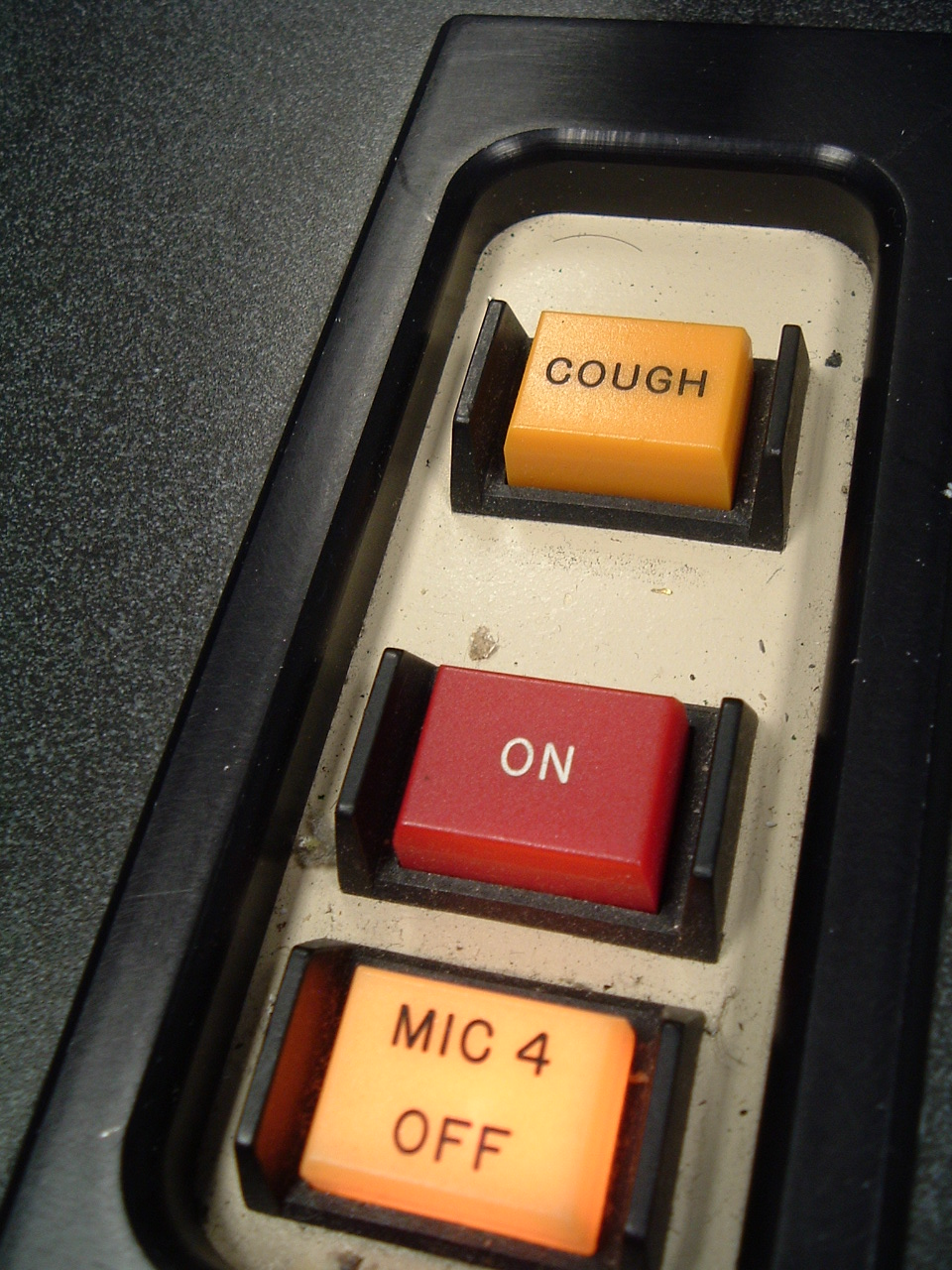
WTJU's Current Air Studio Board (Photo: WTJU)

In honor of WTJU's 50th anniversary in 2007, a special section of WTJU's website was created in order to compile tidbits of the station's history as well as to archive audio and materials from anniversary celebrations. This June, in honor of the station's 55th anniversary celebration, WTJU General Manager Nathan Moore reached out to me. He told me that around 150 people attended the 55th anniversary event on June 2, 2012. Alumni were able to tour the station, get back on the air, and attend a reception and after-party. Moore told me that efforts to archive the station's history are ongoing and plans are in the works for a "searchable digital public archive of WTJUs history."

Moore told me that this year's anniversary party gave him an interesting glimpse into how the station and the university had changed over the years. He explained, "In 1970, WTJU was still a virtually all classical station. It was also all male – UVA didn’t accept women (except to the Nursing school) until Fall 1970. The station’s student management looked something like this. By 1980, the student management looked like this. It was a wild, sometimes anarchic place with rock, jazz, classical, and a few folk shows. The Rock Director had to remind DJs to not smoke pot in the studio. She had to put a stop to a DJ doing lines off one of the turntables."

WTJU DJ in 1966 (Photo: WTJU)

He also explained that WTJU was full of indie rock luminaries in the 1980s and 1990s. According to Moore, "The 1980s and early 1990s at WTJU were the first heyday of college radio – at least as we think of college radio today. Stephen Malkmus was a DJ. James McNew (from Yo La Tengo), David Berman (from Silver Jews), and Rob Sheffield (Rolling Stone critic) were DJs. And a whole lot of other tremendous and passionate people who went on to do other great things, but who aren’t so well known for their work in the music industry."


Moore told me that WTJU didn't have any paid staff until 1993, when the station hired Chuck Taylor as its full-time General Manager.  Taylor retired in 2010 and was replaced by Burr Beard. Soon after Beard was hired, he proposed major programming changes at the station (which I reported on for Radio Survivor in June 2010). His proposal sparked outcry among WTJU's volunteers and even led to the creation of a website called WTJU in Crisis, described as "a clearing-house for the community to encourage full transparency of the changes that are being made to WTJU, The Sound Choice in Central Virginia." By October, 2010, Burr resigned from WTJU. Moore replaced him as General Manager in April, 2011.

Moore, a former college radio DJ himself, answered some questions for me over email in order to give me a sense of how WTJU is doing today. In our interview he talks about efforts to recruit more students to the station, the role of physical music at the station, and how WTJU is enmeshed in the local music scene in Charlottesville, Virginia.

WTJU Live from the Lawn  Protest Rally, which WTJU broadcast live
Pictured (l to r): Lewis Reining, news producer, Tyler Magill, rock DJ, 
Dave Moore (in black shirt, also a rock DJ), and John Casteen, former UVA President. 
(Photo: WTJU)


Spinning Indie: What's your background in radio? Were you involved with other college radio stations?

Nathan Moore:  I started as a college radio DJ at WWVU in Morgantown, WV back in 1998 [and] was a rock DJ for all four years of my college tenure and a talk show host, jazz DJ, and News Director for two years. After graduating, I went to grad school in Madison, Wisconsin [and] got involved as a volunteer at WORT, the community radio station up there. In 2004, I was hired as the full-time News & Public Affairs Director at WORT. In 2007, I was hired as the National Programming Coordinator for Pacifica Radio, and then from 2009-2011, I was the General Administrator at Free Speech Radio News.

Spinning Indie: How are your efforts going to recruit more students? What percentage students/what percentage community members do you have on-air?

Nathan Moore: Efforts are ongoing. Progress, but there's more to do. Last year, we did some outreach tabling, flyer drops, and publicity through UVA departments. This year, we're also putting together three free concerts geared toward campus, including an election night concert and a pretty big battle of the bands style event in the spring. Non-student community members still constitute the large majority of on-air staff, though all our departments are working on bringing in more students. It's easiest to recruit more students for rock, news/talk, and folk & world. A bit harder for classical and jazz, though we've gotten a few more student DJs in those departments, too.

WTJU in 1959 (Photo: Daily Progress) 


Spinning Indie: Do you have music in your collection dating back to the early years of the station? Any favorite gems?

Nathan Moore: Oh geez, probably. WTJU was a nearly all-classical format from its founding in 1957 until 1970 or so, and we have a lot of very old classical LPs. But I honestly haven't taken a thorough inventory. I'm a little bit too young to have grown up with vinyl as the dominant technology, but a little too old to embrace it as a hip way to listen to music.

Spinning Indie: Does WTJU add vinyl? cassettes? How big is your collection of vinyl and do DJs embrace it?

Nathan Moore: Definitely vinyl. Our rock department auto-adds vinyl. Cassettes no. We don't even have a cassette deck hooked up to a  board anymore, though we do have a cassette deck in the production studio rack, should we ever need to pull some old audio off of an old tape. A lot of DJs here are definitely into vinyl. Old-timers and undergrads alike. I'm pretty sure we're the last station in town playing vinyl on-air.

Spinning Indie: Do you add digital releases?

Nathan Moore: Yes, though we mostly still get CDs from the labels. But yeah, in the last six months or so, we installed a 12 TB music server. We add new music to it, as well as ripping our CD collection to it. It's a rather tedious process, but it'll open up new creative possibilities once it reaches critical mass.

WTJU's Recently Revamped Production/News & Talk Studio (Photo: WTJU)

Spinning Indie: Do you have any specific programs/specialty shows that are unique to WTJU or stand out as being different from anything else on radio?

Nathan Moore: A few that come to mind:

-- Soulful Situation: Dixiefried southern soul, uptown northern R&B. Classic tracks presented with much bravado by Rumcove (aka Robin Tomlin). Monday afternoons 12-2pm.

-- Gamut: the gamut of classical music from the middle ages to present. The DJ (Ralph Graves) has never repeated a track since he started hosting the program in 1984. Wednesday mornings 6-9am.

-- The Broadcasting System: A truly freeform radio show that speaks to the incredibly independent spirit of WTJU. Host Tyler Magill recently played Stereolab, Ornette Coleman, and the sounds of woodpeckers in the same half-hour. And it kind of worked. Mondays 2-4pm.

-- Deepest South: This is probably my favorite new show that we rolled out with our July program changes. It's this tremendous genre-agnostic show that redefines how we listen to Latin communities across the globe. Steve Villereal and Anne Dunckel alternate, Thursdays 12-2pm.

Beta Bridge at UVA painted for the WTJU Rock Marathon Fundraiser (Photo: WTJU)


Spinning Indie: What is WTJU's role in the local music scene?

Nathan Moore: We support the local music scene and it supports us. We do artist interviews and live on-air performances, and we play  a lot of local bands' albums. We even have a weekly folk show called "Around This Town" that features artists coming to town in the next seven days. We do promotional trades for a lot of shows. We provide a platform for an awful lot of live music, especially in the local folk & roots music scene. We aired eight or nine live shows from venues around the area in the last year. All of this crosses genres, too – our folk department has been the most active in the local scene, but the rock, jazz, and classical departments have been doing all of this, too.

Spinning Indie: Can you tell me a bit about your new public affairs shows?

Nathan Moore: There's a ton of public radio in Charlottesville – three NPR services, in fact, which is a lot for a market this size. But they're all translators for stations that are elsewhere in the state, which means they're not covering Charlottesville stories with the kind of depth and discussion that they deserve.

Our new show "Soundboard" dives into hyperlocal Charlottesville affairs and also connects national stories to our community, weekdays 9-10am. Right now, we're only producing the Thursday and Friday shows locally, but that'll expand to five mornings in the coming months. The Friday edition of Soundboard is a terrific partnership between us, the alt-weekly C'Ville, and Charlottesville Tomorrow, a hyperlocal online news site. I host the Thursday edition, and I especially like to connect national stories to Charlottesville. We're slated to roll out some weekly recurring segments as the show expands, including: backyard gardening, true stories & improv, natural history, and wine & food.  (Albemarle County is home to more than a dozen wineries.) I'm also working on a content partnership with the daily student newspaper at UVA.

Spinning Indie: Does WTJU interact with the broader college radio community? Do you have friends at nearby stations?

Nathan Moore: Sure. We were also one of the participating stations in the inaugural College Radio Day last year, and we have a contingent that attends MACRoCk each year – the Mid-Atlantic College Radio Conference. We also are very much part of the community radio scene. We're friends with WRIR in Richmond, and I’ve got connections throughout the NFCB world.


Thanks to Nathan Moore for taking the time to chat with me about WTJU. Stick around to see where the Spinning Indie 50 State Tour ends up next...

Thursday, May 3, 2012

Spinning Indie 50 State Tour: Stop 16 - South Carolina's WSBF

After a too long hiatus, the Spinning Indie 50 State Tour returns with an all-new virtual trip to a college radio station somewhere in the United States. The aim of this series is to bring to light some of the intriguing radio stations located in both expected and unexpected places in every corner of the U.S.

The 15 college radio stations that I've featured thus far include stations in Arkansas, Wisconsin, Kansas, Louisiana, Alaska, North Dakota, Nevada, West Virginia, Kentucky, Minnesota, Montana, California, Nebraska, Idaho, and Tennessee.

The time around we venture to South Carolina to learn more about Clemson University radio station WSBF. In existence for more than 50 years, the initial idea for WSBF was conceived by Clemson freshman Van Fair in 1956. After writing a paper for his English class about why Clemson should have a radio station, he began the process of making that desire into a reality. In 1957 he teamed up with other interested students, including one who was running a pirate AM station out of his dorm room. In late 1957 the call letters WSBF were selected and the carrier current campus-only station was built in 1958 and went on the air on May 1, 1958. WSBF then began the process to transition to an FCC-licensed FM station and began FM broadcasts in 1960. In his accounting of the early days of the station, Fair writes, "I know that my experiences at WSBF prepared me as much for life as my Clemson education did." The WSBF website's history section includes reminiscences from a number of former DJs and it's a nice way to get a flavor for the place. There's also a section containing WSBF alumni biographies.

Today WSBF airs an alternative music format with a mix of new music and specialty music shows. They also produce a live music show called "Live Sessions" that is also filmed with the help of their campus TV station and posted to the WSBF You Tube channel.

According to WSBF's General Manager Joe Dubrowski, new music (or "rotation") shows are required to play at least 75% material from the station's new music section and also cannot play material by artists who have had a top 100 Billboard hit or a Gold album.

Dubrowski said that there is still music in the library from the early days of the station. He told me, "We have an extensive library of music dating back to the early days of the station. Our vinyl collection is not in perfect alphabetical order, but if you spend some time looking through it, there are some gems. I like to spend some time reading the reviews and seeing what people had to say about the early works of now legendary artists." He also mentioned that there are some long-running shows on the station, including the Sunday night "Protogressive Show" hosted by Joe Della-Fera for 22 years.

In his email interview with me, Dubrowski also talks WSBF's annual Spring Music and Art show and how the station fits in with the local music scene in Clemson, South Carolina.

2007 Live Sessions Flyer
(courtesy WSBF)


Spinning Indie: Your station has a lengthy history. What are your favorite tidbits/scandals from your station's past?

Joe Dubrowski, WSBF General Manager: My favorite part of station history is the infamous “ball gag” incident. A few station DJs decided they would express themselves in a rather unusual way at the Clemson University First Friday Parade. Their dress and antics at the event got us banned from the parade until just recently.

Spinning Indie: Do most students at Clemson know about the station? Do a lot of students listen to the station? Is the staff/DJs mostly students?

Joe Dubrowski: Clemson is a big school and there are a lot of activities to get involved in, but being a part of WSBF is the best choice any student could make. When I first came to Clemson 5 years ago, I would say that most students did not know about WSBF. However, some big promotional efforts in the last several years have raised awareness. Currently, I'd say that most students know that we are here. Most of our staff is made up of students but we do have a group of graduate students and community members and we have had professors and other Clemson University staff in the past. To my knowledge, we are the only student organization on campus that allows and encourages membership by non-students.

Spinning Indie: What's the local music scene like and how is WSBF involved with that scene?

Joe Dubrowski: The local music scene in Clemson is, let's say, developing. The biggest challenge in Clemson is the lack of any dedicated music venue. The only choice for artists is a handful of bars, none of which have an ideal set up. Anytime WSBF puts on a show downtown, we bring our own equipment and sometimes we even rent and assemble a stage for the performers.With that said, we have a unique role in our community because of the lack of an established scene. In many ways, we really ARE the music scene. WSBF has developed a loyal following and many people will come out to our shows regardless of the genre. It's pretty cool to see the diverse crowds at our shows. It feels good to see a dedicated group of people who enjoy supporting live music and their local radio station.


Spinning Indie: Can you tell me a bit about the festivals that you've produced?

Joe Dubrowski: The WSBF Spring Music and Arts Festival is currently in its 4th year and I'm always excited to see the growth of the event from year to year.  This all day event showcases national and local musicians, artists, vendors, and businesses. WSBF Spring Music & Arts Festival is a service-oriented event that aims to collect donated goods to be provided to the neighboring communities where it is needed most... WSBF Spring Fest IV... [took] place on Friday, April 13th at Tiger Park in Clemson, SC.
Spinning Indie: Do you listen to other college radio stations? Who do you admire?

Joe Dubrowski: I love WUSC in Columbia at the University of South Carolina. A lot of us listen to them and we have a good, friendly relationship. In the past we have co-sponsored some shows and events. Last year, we invited the DJs at WREK at Georgia Tech up to Clemson and had a fun time hanging out with them. We are also jealous of their 100,000 watt output power! I think it is important that college radio stations support and learn from each other, especially with the current state of college radio.

Spinning Indie: Anything else?

Joe Dubrowski: I'd just like to mention our recent partnership with RadioFlag. RadioFlag is an Internet social media website that connects radio stations with a focus on college, community, and independent radio. With their help, we have seen our listenership increase. We are one of only a few stations to receive an award from them as a "Spirited College Radio Station". In addition, we are the southeast representative on their College Radio Advisory Board. I am excited about our future collaborations and can’t thank them enough for their continued support.

I'd also like to extend a big thanks to Spinning Indie for this interview and featuring us in the 50 State Tour Series. For more info on WSBF you may visit our website at wsbf.net or facebook.com/wsbf881. We are also on twitter @WSBF_FM.


Wednesday, April 11, 2012

Radio Station Field Trip 30 - KCNL, KSJO, and KLOK in San Jose

Outside KLOK, KCNL, KSJO headquarters in San Jose
(All photos by Jennifer Waits)

Back in February I received an email with an intriguing offer of internships for college students interested in working in radio. The attached flyer stated,  

"Hey radio junkies! Want to host your own radio show? Buzz Radio FM is looking for new DJ’s in San Jose! No experience needed. Pick and choose your own style of music, program, and/or show. Reserve your preferred time slot NOW! For as little as $30 per hour!" 

It turned out that the station, Buzz FM, was affiliated with commercial radio station KCNL 104.9 FM in San Jose. With my curiosity piqued by this offer, I scheduled a visit to KCNL to learn more about their radio operations and to find out how college radio DJs could get on the air at their station. 


On the afternoon of February 21, 2012, I trekked down to the San Jose headquarters for commercial radio station KCNL and its sister stations KLOK and KSJO. The non-nondescript mid-20th century building housing the stations is located in the historic KLOK building in southeast San Jose. Adjacent to the building is a large field containing radio equipment, satellite dishes, and towers, with a view of the nearby foothills. 


A 25th anniversary plaque from 1971 at the entrance to the building reads, "On October 13, 1946 E.L. Barker, founder of KLOK radio began his 'birth of a station.' The first broadcast on 1170 KCS was with a 5kw signal for daytime only." According to the plaque, Barker sold KLOK to Davis Broadcasting in 1967 and in 1969, "KLOK radio became the most powerful standard broadcasting station in the entire Santa Clara County with a signal increase to 50kw daytime."


Today, KCNL, KLOK (still at 1170 AM), and KSJO (92.3 FM) are owned by Principle Broadcasting Network, a "portfolio holding company" for Mercury Capital Partners. Principle bought these three stations between 2009 and 2011 and according to the Mercury Capital Partners website, the stations are run using a "ethnic brokered time business model." Through this model, they lease out airtime to "various ethnic groups who have traditionally been disenfranchised from gaining access to the kinds of mainstream media broadcast properties which Principle owns." Currently they lease airtime on KCNL to the Hispanic community, rent airtime on KSJO to the Chinese community, and sell airtime on KLOK to the Asian Indian community.

Buzz FM Studio at KCNL
(Photo: J. Waits)

In addition to leasing airtime over traditional FM and AM airwaves, Principle has also been establishing separate radio brands on various HD channels. As it turns out, Buzz FM, which initially had led me to visit KCNL, is a new project over KCNL 104.9 FM's HD3 channel. While Buzz FM awaits programmers, its HD channel and website currently airs a mix of automated music ranging from the Beatles to the Cure to Johnny Cash. 

When I visited in February, I was told that it was a brand new project that had only really started two weeks before I stopped by. At that point it hadn't been promoted or marketed and its sole program was hosted by a member of their station staff. That show, "The Weekend Show" aired on Sunday nights beginning back in December, 2011 and by mid-February there had been 8 episodes of the male-oriented talk show. When I checked this week, the Weekend Show website was no longer available. 

In addition to Buzz FM, KCNL also utilizes a second HD channel, HD2, for S*ALT (aka Save Alternative). This alternative rock format also airs over KCNL's regular 104.9 FM signal on Saturday and Sunday nights and is available online 24/7. Prior to the launch of Chinese programming on KSJO, Save Alternative briefly aired over 92.3 FM. 

Messages from KCNL Guests and Hosts in Hallway at Station
(Photo: J. Waits)

The remainder of the KCNL schedule, under the brand iFM, is made up of Spanish language talk shows and music programming, including bilingual alternative rock. According to Principle's Local Sales Manager Manuel Rojas, "the community" is on the air at KCNL, including "the guy next door and his business." Brokered shows on KCNL include a range of programs including specific shows focused on health, religion, and music.


In terms of the current programming on KSJO 92.3 FM goes, it's comprised of brokered Chinese language programming over the regular FM channel under the brand China 92.3 FM. The format change to Chinese-language programming began in 2011 after Principle purchased KSJO from Clear Channel. The schedule today is made up of talk (including one show hosted by a man who one DJ at KSJO characterized as the "Larry King of the Chinese community"), music, news, and entertainment shows in Cantonese and Mandarin. During periods when the airwaves are not leased out, they play a mix of automated Chinese music programming. 


On KSJO's HD2 channel they broadcast technology-themed talk shows and techno music under the brand 24/7 Tech Radio. A message on the KSJO website also invites interested parties to get involved with the new channel, stating, "Universal Media Access is in the process of developing a 24/7 Tech Channel. If you are interested in being part of this project, send us an e-mail..." Not much content is available on the 24/7 Tech Channel website, but 4 episodes of September broadcasts of the program "Tracking the Tech Revolution," are available to listeners. It's unclear from the schedule if there are regular talk shows airing right now.


Principle's purchase of KLOK from Univision was completed in 2009. Today the 50,000 watt AM station broadcasts Asian Indian brokered programming under the brand Desi 1170 after launching with an all-music format. Shows range from talk shows hosted by members of the community (including shows dealing with law, mortgages, wellness, and money management), a Christian show, and a range of programs from the entertainment network Radio De' Hotties. When there isn't a live or brokered show, KLOK plays contemporary Indian music across a variety of genres. Desi 1170 is also simulcast into New York City.


As I toured around the offices for each station, I also noticed some of the things that were missing. There is no physical music library at any of the stations, although I was told that Principle did acquire some vinyl records from Clear Channel as part of their purchase. That material is in storage. DJs at various stations do bring in physical music from time to time, but Rojas said that it is mostly used as background music since the traditional AM and FM stations are mostly talk. I did see CD players and even a turntable (at Buzz FM), so DJs and hosts certainly do have the ability to play physical music if they desire.


Less than 6 weeks after my visit, word came out that Principle would be selling KCNL to University of Southern California (USC) for use in their network of classical radio stations as another outlet for broadcasting KDFC (which currently airs over the former college radio station KUSF as well as over 2 additional signals in the North and South Bay Area). In light of this pending station ownership transfer, the future KCNL's HD programs (Buzz FM and Save Alternative) is a bit unclear at the moment.

According to Brad Behnke, COO of Principle, Save Alternative (S*ALT) "will continue as an Internet operation." He told me that they are "still studying Buzz" to see if it will continue online or over another HD channel. In any event, the brokered Spanish language programming on KCNL will end by the time that the FCC approves the license transfer, if not sooner. 

Although a local marketing agreement (which would allow USC to rent the KCNL airwaves in advance of FCC approval of the license transfer) was included with the FCC paperwork regarding the sale, Behnke says that the timing of the beginning of classical programming over KCNL "depends on when the FCC grants the license transfer." When I asked Brenda Barnes, President of USC Radio, about the timing of the start of classical music programming over KCNL she said, "We haven't determined that yet." As far as whether or not this sale might have implications for Principle's other properties of KLOK and KSJO, Behnke said, "remains to be seen."


In the weeks to come we will probably learn more about what the future holds for KCNL and its related brands in light of its pending sale to USC. I feel lucky to have gotten the chance to visit this commercial radio station group in advance of these upcoming changes. Thanks to Rojas and everyone else at Principle for giving me a glimpse into their intriguing group of commercial radio stations.


See a complete list of all of my Spinning Indie Radio Station Field Trips here.

Monday, February 13, 2012

Radio Station Field Trip 29 - Trinity FM at Trinity College Dublin

View out the Window at Trinity FM

Last month when I was visiting Ireland I managed to visit two student radio stations near Dublin. My first stop was Belfield FM, which I profiled a few weeks back. My next visit was to the Trinity College radio station in Dublin, known simply as Trinity FM.


I headed over to Trinity FM on the afternoon of Tuesday, January 17, 2012. Located near the entrance to the college, the station was on the top floor of House 6, a historic campus building that contains a number of offices, including a book shop and the communications office. Trinity College itself is more than 400 years old and the campus features beautiful old buildings surrounding a central area full of walking paths and green spaces. Despite the age of the university, the radio station is relatively new and first started as a temporary station around 1998 in order to cover the "Trinity Ball," a massive annual music party held on campus to celebrate the end of each academic year. The station was such a hit that they decided to keep it going.

Trinity College Dublin. Trinity FM is Located on the Top Floor

Run entirely by student volunteers, Trinity FM operates out of a small space up several flights of stairs in House 6. When I visited they hadn't yet resumed broadcasting for the semester, but were set to start webcasting from 5pm to midnight beginning on January 30th. As is the case with many student stations in Ireland, Trinity has a special radio license that allows them to broadcast over FM for a specific number of weeks every year. This year they are approved for 6 weeks of terrestrial broadcasts, which will air from 9am to midnight during 6 pre-arranged weeks throughout the year over 97.3 FM. The first FM week this semester will be the week of February 20 to 24.

An old Schedule for Trinity FM

Trinity FM's Station Manager Matthew Taylor toured me around the station and filled me in on the inner-workings of the station. Taylor said that there is a great amount of interest in the student radio station, with 300 people signing up to join Trinity FM during Freshers Week (the week before classes start). He said that about 100 students are active at the station, with a core group of 20 to 30 volunteers. Students who sign up to volunteer at Trinity have the opportunity to apply for regular streaming shows, which pretty much air for the entire year. Approximately 60% of the streaming shows are music shows and 40% are talk programs.

Trinity FM Station Manager Matthew Taylor in the Studio

FM shows work a little differently and the application process is much more competitive. An editorial board selects programs for FM across a number of specific categories, including news/current events, culture, Irish, light entertainment, film, European affairs, and music. Taylor said that the FM slots fill up quickly, as editors match applicants with available time slots. During the weeks when FM broadcasts occur, the regular streaming shows go on hiatus.


In terms of content, shows on Trinity FM include the live music show Reverb, which features local bands, the popular long-running (it's in its 7th year) Plastic Soul show which is hosted by a Drama lecturer from Texas, and a vinyl-focused show called Wax Poetics. Over the years there have also been a number of shows hosted by international students from Russia, the United States, and South Africa. Schedule updates can be found on Trinity FM's twitter feed and on its Facebook group.


Taylor said that DJs have a lot of freedom to do what they'd like on their shows as long as they are respectful of the rules. Hosts are asked to limit swearing before 8pm and to not air anything libelous. They also aren't allowed to smoke or drink in the studio so as to ensure that equipment isn't damaged. Taylor mentioned that many years ago a DJ was kicked off the air after for a foul-mouthed show about bondage. He said that when the show was initially awarded the DJ was vague about the concept of the show, so it ended up being a surprise to the staff when he went on air. He added that they do listen and check in on FM shows in particular for appropriateness, especially after that incident. Streaming content has a little more freedom and isn't as regulated as terrestrial radio in Ireland.


They've opted to divide the 6 weeks allotted for FM broadcasts across the academic year so that terrestrial broadcasts occur for the most part during the last week of every month. The frequency of 97.3 is actually shared across a number of broadcasters, which is part of the reason why they are only licensed to use it for a certain number of weeks every year. The FM signal only reaches about 2 miles, so for the most part Trinity FM is only heard on campus.

Trinity FM Office

The small Trinity FM space includes an office and the broadcast studio. Since it's in a historic building they have some limitations on what they can do with the space and because of that they are unable to do extensive soundproofing. For that reason they have to make sure that people in the office aren't too loud when a DJ is on the air in the adjacent studio. Additionally, because the historic structure can't be upgraded to be wheelchair accessible, Trinity FM is unable to apply for some community funding that is contingent upon having a more accessible station. There was some talk that they might be about to move to a Student Center in a different building, but those plans were squashed when a Student Center referendum failed to gain enough votes.

Trinity FM Studio (Notice the Old Fireplace in the Background)

For the most part DJs bring their own music to Trinity FM, with some opting to bring CDs and vinyl, but many just use You Tube or play music from their laptops. While I was touring the station, one DJ popped in and mentioned that he'd been sent a red transparent vinyl record and he spoke of it as if it was a novelty, so it would seem that vinyl is only sparingly played there despite the availability of turntables. They have a 45 gig library of digital music available for DJs to play, but there isn't much in the way of a physical library. A CD library does exist, but it was in a locked cupboard when I visited. I was told that DJs play an eclectic mix of music including indie, folk, reggae and live music.


In addition to their on-air work, Trinity FM also brings events and lectures to Trinity College, including a series of talks presented by professional DJs who have shared stories about working in radio. One station volunteer is working on a graduate project related to radio journalism and someone else from Trinity FM did her dissertation on the topic of radio and society. The station has also put on a number of concerts on campus, including a recent one in a chapel and another in a gothic building. One ambitious event, the Hallow Sessions, was a mini acoustic music festival.


As I toured the station I was also impressed to see their painted wooden signage. I was told that due to the inclement, often windy and rainy weather in Ireland, regular banners often blow away at events. Because of that, they have built big wooden signs that they haul out for campus events like Freshers Week (the week before classes start).


Taylor said that he's really enjoyed his time at Trinity FM and mentioned that he's gotten close to many people through his work there. He used to do a news and public affairs show and has attended conferences in Brussels on behalf of the station. He said, "Being on the radio is really fun."

Thanks so much to Matthew Taylor and everyone else at Trinity FM for giving me the grand tour.


Previous Spinning Indie Radio Station Field Trips:

Field Trip to WECB at Emerson College
College Radio Field Trip 2 - Cal Poly's KCPR
College Radio Field Trip 3 - Notre Dame's WVFI
Radio Station Field Trip 4 - WFMU in Jersey City
Radio Station Field Trip 5 - East Village Radio in NYC
Radio Station Field Trip 6 - WNYU in New York City
Radio Station Field Trip 7 - Northwestern's WNUR
Radio Station Field Trip 8 - Stanford's KZSU
Radio Station Field Trip 9 - University of San Francisco's KUSF
Radio Station Field Trip 10 - Santa Clara University Station KSCU
Radio Station Field Trip 11 - UC Berkeley's KALX
Radio Station Field Trip 12 - KSJS at San Jose State University
Radio Station Field Trip 13 - WBAR at Barnard College
Radio Station Field Trip 14 - KFJC at Foothill College
Radio Station Field Trip 15 - UC Santa Cruz Station KZSC
Radio Station Field Trip 16 - Haverford College Station WHRC
Radio Station Field Trip 17 - FCCFree Radio in San Francisco
Radio Station Field Trip 18 - Flirt FM in Galway, Ireland
Radio Station Field Trip 19 - RXP 101.9 FM in New York City
Radio Station Field Trip 20- WGBK at Glenbrook South High School
Radio Station Field Trip 21 - KPDO in Pescadero, California 
Radio Station Field Trip 22 - KZYX in Philo, California 
Radio Station Field Trip 23 - San Francisco's Pirate Cat Radio
Radio Station Field Trip 10.5 - KSCU's New Digs at Santa Clara University (2010)
Radio Station Field Trip 24 - Radio Valencia in San Francisco
Radio Station Field Trip 25 - WZBC at Boston College
Radio Station Field Trip 26 - KSFS at San Francisco State University 

Wednesday, January 25, 2012

Radio Station Field Trip 28 - Belfield FM at University College Dublin

When I was out of the country during the past few weeks, I couldn't resist the opportunity to resume my Spinning Indie radio station field trip series by visiting a few student radio stations in Ireland. First up was Belfield FM, the student radio station at University College Dublin (UCD). Located just outside of Dublin in the town of Belfield, the station itself is hidden away on a corridor just off a tunnel adjacent to the James Joyce Library. During the 2011-2012 academic year the station is broadcasting on 107.8 FM and online.

 Belfield FM Office

An interesting thing about many student radio stations in Ireland is that some of them bounce around the FM dial and aren't on the same frequency from year to year. Each year certain stations apply for a frequency and last year Belfield FM was only on FM for a total of 4 weeks. The Broadcasting Authority of Ireland (BAI) is the regulatory agency that handles radio licensing in Ireland. The BAI allows for temporary radio licensing, which is why a number of stations operate for only a few weeks out of the year. A recent list of temporary sound broadcasting applications  (PDF) includes Belfield FM, which is licensed to broadcast Mondays through Fridays. Currently they broadcast from 1pm to 9pm from a transmitter atop their campus building, although most of their listeners tune in online. Some other college radio stations in Ireland, including Spinning Indie field trip stop FlirtFM, are designated community/special interest broadcasters and broadcast on a more permanent basis.

Belfield FM Studio

Student radio has been a staple of UCD since 1990, although the name Belfield FM wasn't introduced until 2006. In the early days, they only broadcast terrestrially for 4 to 6 weeks out of the year and the station shut down for several years before relaunching. Since 2008 the station has been in its current location, but it's scheduled to move to a new Student Center on campus in September. Its new studio in the Student Center has already been built and they should have access to it by April. They will continue to use the current studio as a production studio so that DJs will have the ability to pre-record their shows.


I visited Belfield FM on the afternoon of Monday, January 16, 2011, which was the first day of broadcasts for the new semester. Although I knew the general location of the station, I still had a difficult time finding it since the door to the station only contained a tiny handwritten sign on a ripped scrap of paper reading "Belfield FM." The volunteers who I met with told me that every year the station is a stop of a campus "treasure hunt" and acknowledged that they should probably make a bigger sign.

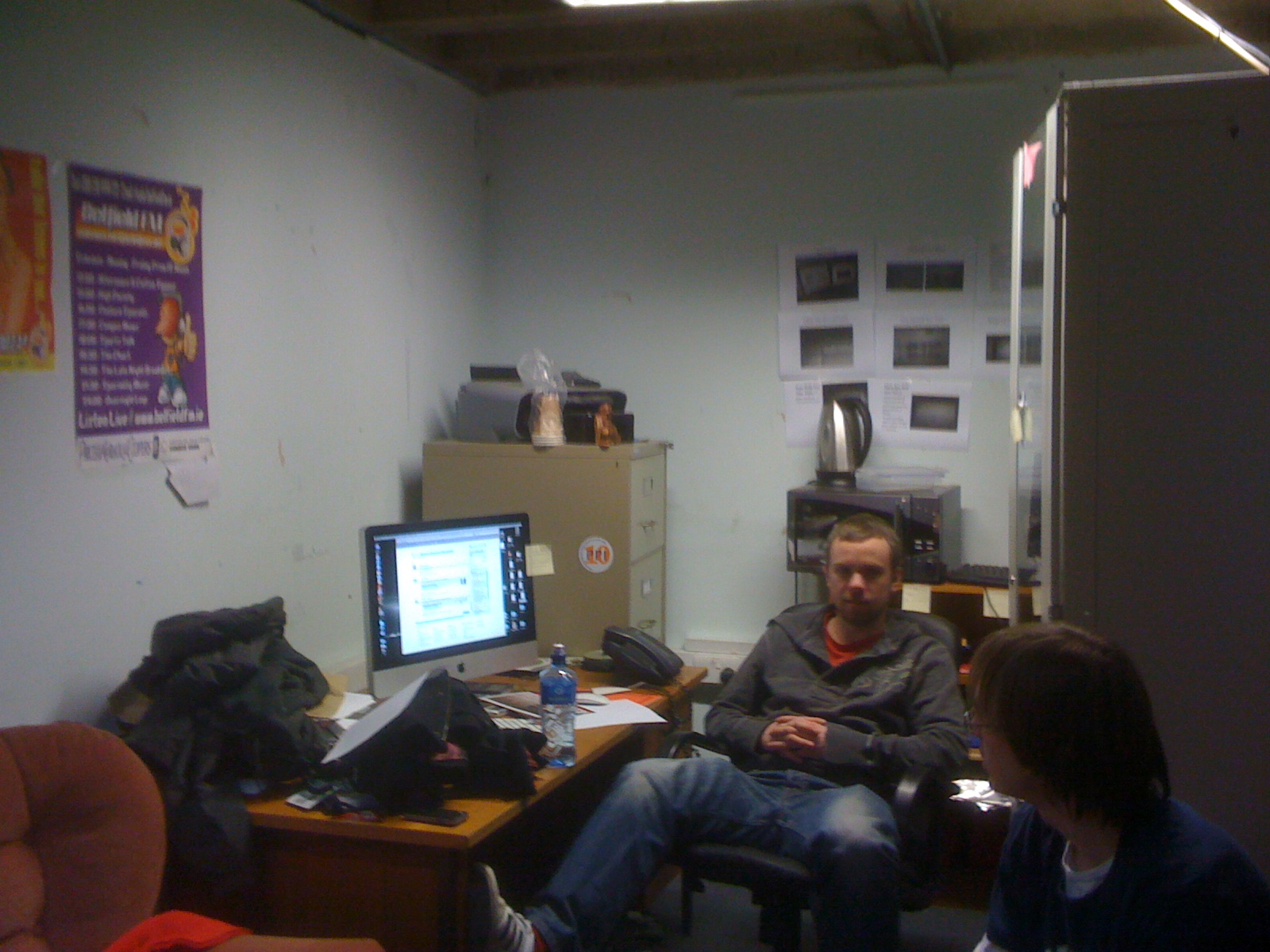
Belfield FM's small space contains an office with a couch, desk, and broadcasting equipment as well as an adjacent studio. Although the surroundings are spartan, the station has around 80 volunteers including approximately 50 regular participants.

 Checking out the lack of signage of the door to Belfield FM

When I visited, 4 DJs were hanging around the office and it was fun hearing their stories about the station. Station Manager Peter Branigan toured me around the station and was joined by the Executive Producer of BeatsanPieces Dylan Gray, Assistant Manager Oisín Boyce, and Assistant Manager Darragh O'Connor. They all pointed out the great sense of community that they've felt at Belfield FM and mentioned that they've met many of their close friends through the station. They also mentioned that many students on campus are interested in coming in to the station and that they frequently have friends asking them about radio.


The station isn't connected to an academic department at UCD, instead existing as a student club that is funded by the Student's Union and student fees. DJs have a lot of freedom and there are a range of shows on-air, from music shows, to talk shows, to sports programs. There aren't too many restrictions other than not swearing (they told me that there are 5 dirty words in Ireland) or defaming anyone over the air. DJs keep track of their playlists on paper, but those lists aren't used for any sort of charting.

Paper Playlist

Although there isn't much in the way of a music library other than a small drawer full of CDs, most of their material has been digitized and Belfield FM has a digital music library containing nearly 16,000 tracks. Most DJs bring their own music and frequently play material and music off of You Tube. CD players are also available for DJs to use, but there are no turntables or tape decks in the studio.

CD Drawer

Live bands also come to play at Belfield FM, particularly on the "Unsigned and Underrated" show. There's also an "International Music Show," on Friday nights at 5:30pm, "School of Heavy Metal Studies" program on Wednesday nights at 5:30pm, and an "Electro Show." Darragh O'Connor also hosts the "Wrestleview International Desk" program which delves into the world of wrestling.


Belfield FM has also produced a number of live broadcasts, including sabbatical debates, which they broadcast from a nearby campus theater by running wires from their studio. They just got funding to purchase an outside broadcast unit, so the station is hopeful that it can air more live events, including sports commentary.

Belfield FM Broadcast Bible

I'm always interested in the nitty gritty details about a station's operations, so I was excited to grab a copy of the Belfield FM Broadcasting Bible from 2009-2010 (a copy of which can also be found on their website, along with other materials for volunteers). According to the Broadcasting Bible, "We want to provide the students of UCD with an accessible forum for information, debate and concerns relevant to all aspects of student life, and to create an awareness of the student community among the wider population of the city."

Thanks to everyone at Belfield FM for showing me around your fine station! Stay tuned, my next stop in the Spinning Indie field trip series will be to another student radio station in Ireland.


Previous Spinning Indie Radio Station Field Trips:

Field Trip to WECB at Emerson College
College Radio Field Trip 2 - Cal Poly's KCPR
College Radio Field Trip 3 - Notre Dame's WVFI
Radio Station Field Trip 4 - WFMU in Jersey City
Radio Station Field Trip 5 - East Village Radio in NYC
Radio Station Field Trip 6 - WNYU in New York City
Radio Station Field Trip 7 - Northwestern's WNUR
Radio Station Field Trip 8 - Stanford's KZSU
Radio Station Field Trip 9 - University of San Francisco's KUSF
Radio Station Field Trip 10 - Santa Clara University Station KSCU
Radio Station Field Trip 11 - UC Berkeley's KALX
Radio Station Field Trip 12 - KSJS at San Jose State University
Radio Station Field Trip 13 - WBAR at Barnard College
Radio Station Field Trip 14 - KFJC at Foothill College
Radio Station Field Trip 15 - UC Santa Cruz Station KZSC
Radio Station Field Trip 16 - Haverford College Station WHRC
Radio Station Field Trip 17 - FCCFree Radio in San Francisco
Radio Station Field Trip 18 - Flirt FM in Galway, Ireland
Radio Station Field Trip 19 - RXP 101.9 FM in New York City
Radio Station Field Trip 20- WGBK at Glenbrook South High School
Radio Station Field Trip 21 - KPDO in Pescadero, California 
Radio Station Field Trip 22 - KZYX in Philo, California 
Radio Station Field Trip 23 - San Francisco's Pirate Cat Radio
Radio Station Field Trip 10.5 - KSCU's New Digs at Santa Clara University (2010)
Radio Station Field Trip 24 - Radio Valencia in San Francisco
Radio Station Field Trip 25 - WZBC at Boston College

Tuesday, January 17, 2012

Save KUSF Protest Marks One Year Anniversary of KUSF Shutdown

It's hard to believe that it's already been a year since KUSF was taken off the air by officials at University of San Francisco. 2011 was marked by a year of protests and actions by KUSF supporters, as well as by the launch of KUSF in Exile in order to keep the spirit of KUSF alive. Tomorrow, in honor of the anniversary of the shutdown, there will be a protest at 10am (the time that KUSF turned to static on January 18, 2011) at Entercom headquarters in San Francisco. The programming now airing over KUSF's 90.3 FM signal (classical station KDFC) is originating from Entercom headquarters. KDFC (now owned by Classical Public Radio Network) used to be a commercial classical station owned by Entercom.

The January 18, 2012 protest will take place from 10 to 11am at 201 Third Street (at Howard). Later that evening, there will be an after-party at WIX Lounge (3169 22nd Street, between Capp and Mission in San Francisco) featuring guest speakers and KUSF in Exile DJs spinning records.